
Emperor Scorpion
Pandinus imperator
Arachnid
-two body sections
-eight legs
-ambush predator
Scorpions use their stingers and large claws to hunt their prey—usually insects, spiders, small lizards, or even other scorpions. Once a meal is captured, the scorpion uses its fangs to secrete a substance into its catch that liquefies its meal. It shreds its prey with its claws and sucks out body fluids.
Of the 1,100 known species of scorpions, only 30 are known to be dangerous to humans. As a general
rule, scorpions with small, narrow claws and a fat tail are more toxic than scorpions with very large
claws. The actual size of scorpion does not represent how toxic it is.
Is this scorpion dangerous?
While they are docile and rarely sting, the Emperor Scorpion is harmful to those with insect sting allergies. Their venom is mild—a sting similar to that of a bee.
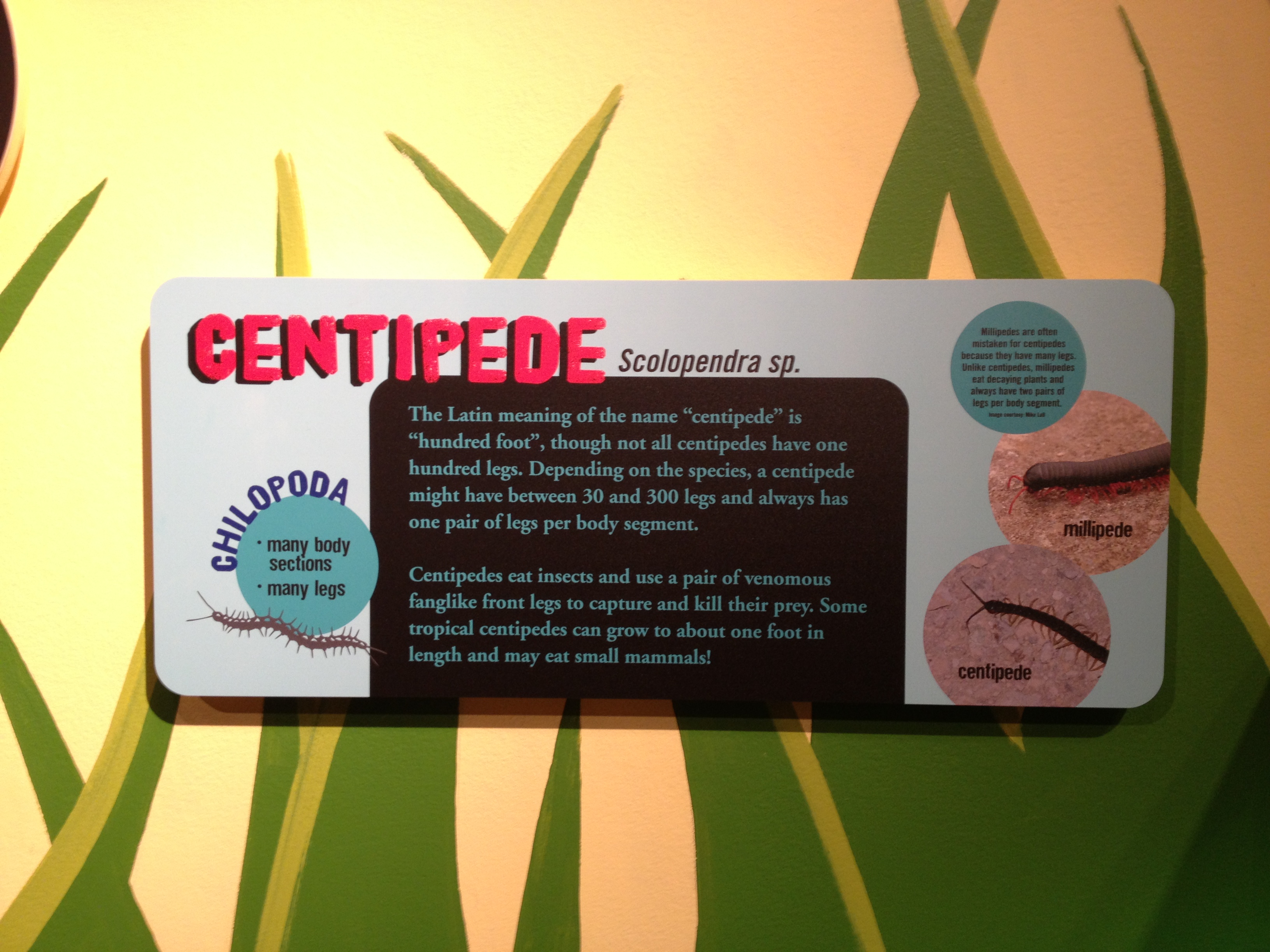
Centipede
Scolopendra sp.
Chilopoda
-many body sections
-many legs
The Latin meaning of the name “centipede” is “hundred foot”, though not all centipedes have one hundred legs. Depending on the species, a centipede might have between 30 and 300 legs and always has one pair of legs
per body segment.
Centipedes eat insects and use a pair of venomous fanglike front legs to capture and kill their prey. Some tropical centipedes can grow to about one foot in length and may eat small mammals!
Centipedes and Millipedes
Millipedes are often mistaken for centipedes because they have many legs. Unlike centipedes, millipedes eat decaying plants and always have two pairs of legs per body segment.
 Susan Golland